
Starting a Lackawanna County Residents Search
A Lackawanna County residents directory search works best when the first record matches the question. A current address or owner name belongs in the Assessment Database. A recorded sale, mortgage, or older owner belongs in the Recorder index. A historical household is more likely to appear in a Scranton or Carbondale directory, census microfilm, or a newspaper run. A public court docket is a case lead, not a home-address record. Each source has a different purpose, so a result should be compared with another custodian before a name is treated as the same person.
Property ownership and a tax mailing address are useful leads, but neither identifies every person in a home. The county does not publish one complete household roll. For a recent name, begin with a parcel or recorded-document connection. For a past address, work backward through deed parties and then place directory and census years around that chain. When a source has no online index, use its counter, request form, library collection, or archive route instead of filling gaps by guesswork.
- Run the known address, owner surname, or parcel identifier in the Assessment Database and keep the parcel number with the result.
- Compare the property’s situs address with the separate tax-mailing field, without treating mail delivery as proof of occupancy.
- Use the Recorder’s grantee, grantor, date, or legal-description search to test a transfer trail.
- For a historical household, check the closest directory year, census availability, and local newspaper evidence.
- Ask the specific custodian for a missing existing record, using Pennsylvania’s Right-to-Know route only where it applies.
Lackawanna County Records Offices for Residents
The county’s property, estate, court, and election channels are separate. The Assessment Office supplies parcel and owner leads. The Recorder supplies recorded-party and deed references. The Register of Wills is the estate and marriage channel, while the Clerk of Judicial Records handles county court material. Elections has its own statute-controlled records. That division is important: the requester should approach the office that created the record, rather than treating a general request as a shortcut around court, vital, or election rules.
Recorder of Deeds
123 Wyoming Avenue, Suite 218
Scranton, PA 18503
570-963-6775
Assessment Office
123 Wyoming Avenue, second floor
Scranton, PA
570-963-6728
Use the county’s property database for owner, address, and parcel leads.
Elections and Voter Registration
123 Wyoming Avenue, second floor
Scranton, PA 18503
570-963-6737
Use the state status service or ask the county for its current statutory list process.
Searching Lackawanna County Parcels by Name
The Lackawanna County Assessment Database is the most direct current property lead because it accepts owner name, street address, and parcel number. Its basic screen labels the owner format as last name first. A street search can use an exact pattern such as a number and street, while a street name alone begins a broader search; the documented contains option uses an asterisk or percent sign before the street name. Municipality, sort direction, and result-count controls help narrow a result without changing the underlying parcel record.
The official Assessment basic search is shown below. Capture the PIN, owner field, situs location, and deed reference only as the actual result supplies them. The county says the public data is for the user’s own use, and its disclaimer remains part of the access path.
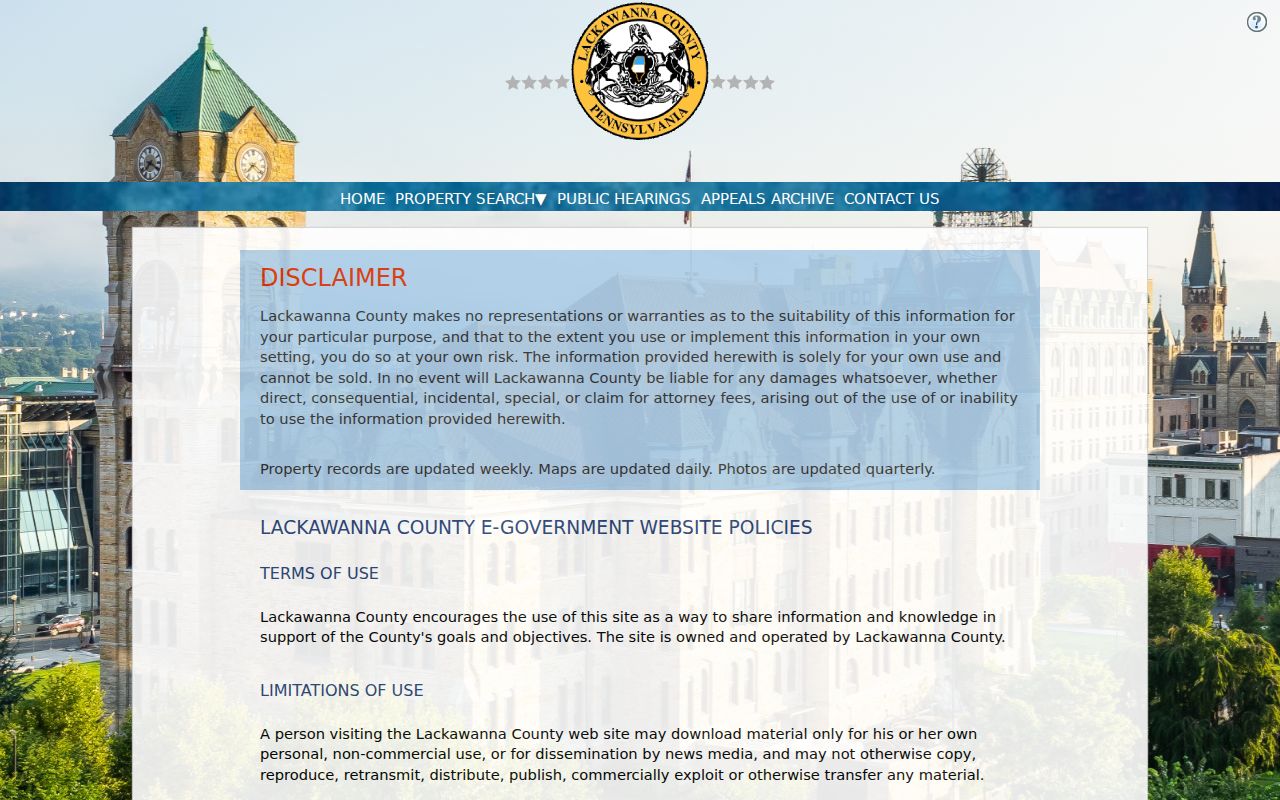
A parcel record can connect a name to county property data, but it cannot identify every resident at that location.
| Owner Name | Use surname-first format in the basic search. |
|---|---|
| Street | Search an exact address or use a documented broader street-name pattern. |
| Parcel Number | Preserves the county’s property identifier for later comparison. |
| Advanced route | Adds land-use, municipality, sales date, sales price, owner, parcel, and street criteria. |
The current-year tax search has its own search convention. It accepts PIN and Location Address in the property-information area, then places Name, Mailing Address, City, and ZIP under owner information. Its Location Address instruction calls for the house number and street name only, while its name examples use surname first. The on-screen default tells a user to enter only the tax-bill name before searching, so adding several unrelated fields can prevent a useful result. Read any parcel card for its actual populated fields and redactions instead of assuming each record displays every available data element.
Lackawanna County Recorder Names Since 1878
The Recorder’s inspected Self Service form reported an indexed range from January 1, 1878 through August 27, 2026. Its party fields include Both Names, Grantor, and Grantee, and the legal-description route includes municipality, lot, block, unit, and UPI. For a property trail, start with the present owner as grantee, identify the document and legal description, then use the prior grantor as the next search term. That sequence is stronger than relying on a street number that may have changed.
The direct index is a finding aid, which the Recorder compares with a library card catalog. It is free to search, but an image may require the cart, an account, the counter, mail, or phone channel. The county-linked Laserfiche index books provide a second historic route. Search spelling variants when needed, then confirm the document rather than treating the index line as proof of every fact.
Lackawanna County Court Record Name Results
The Pennsylvania Judiciary Web Portal is the public starting point for Lackawanna County common-pleas and magisterial docket sheets and calendars. Participant name, date, court, case category, status, and county filters help distinguish a similar name. A public docket can establish case placement and listed events, but it does not replace the official file. Sealed, juvenile, expunged, limited-access, and confidential matters should never be inferred from a missing result.
The official court case-search help illustrates the public access channel. The portal warns that recent filing-office entries may not appear immediately, so a precise courthouse request is the appropriate follow-up for a record the court can release.
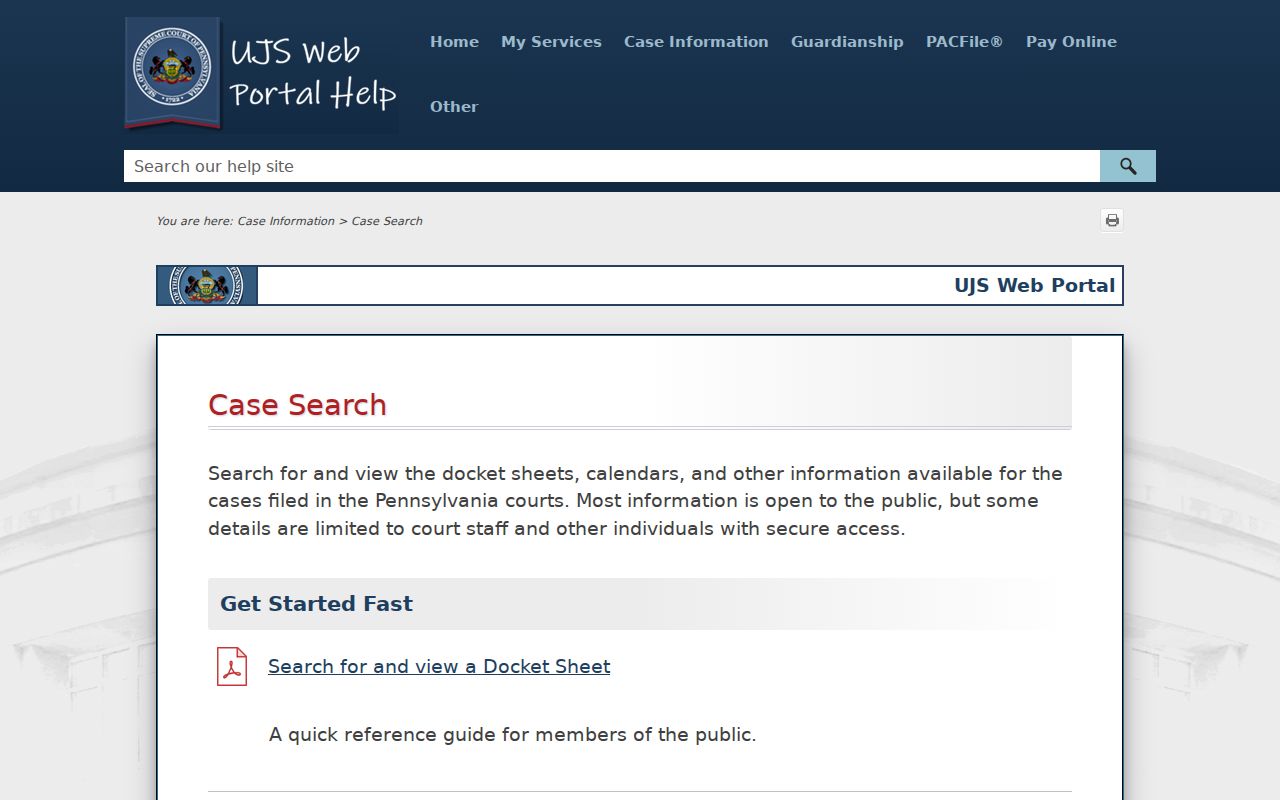
Use the docket number, court, and case date to test a result against another official record, not to make a conclusion from a name alone.
Current Lackawanna County Resident Directories
Current directory-like records in Lackawanna County are purpose-built records, not one public list. The assessment and tax systems identify property and billing connections. The Recorder names parties to recorded instruments. Court dockets identify public case parties, subject to court rules. Election information follows the Election Code, and the personal status tool is designed for a voter’s own registration check rather than street browsing. The rows below distinguish the question each record can answer from claims it cannot support.
| Source | Who It Lists | Keeper | Access |
|---|---|---|---|
| Assessment and tax record | Assessment owner, parcel or location, and tax-mail destination as shown | Assessment Office and tax channel | Public online search |
| Recorded-instrument index | Grantor, grantee, transaction date, and legal-description trail | Recorder of Deeds | Free index; copy routes differ |
| Public court docket | Public case placement, party, caption, and listed events | PA Judiciary and court custodian | Public portal with rule-based limits |
| Estate and probate file lead | Decedent, estate file, and personal-representative lead where open | Register of Wills | Office and genealogy-request channels |
| Local history collection | Historical household, address, and newspaper context | Libraries and Historical Society | Catalog, microfilm, appointment, or inquiry |
A person-specific comparison is most reliable when two independent custodians agree on a parcel, date, record number, or party role. The Lackawanna County resident lookup details that one-person verification method. The most useful next step changes with the answer sought: a deed for a transfer, a court docket for public case placement, or a directory and census pairing for a former household.
Lackawanna County Voter Records Follow Election Law
Pennsylvania’s online voter-status service is not a public resident browser. The documented street-and-house-number route is a public-information list requested under 25 Pa.C.S. § 1404. A registered Pennsylvania elector must make the written request, show identification, sign the prescribed use statement, and pay reproduction or postage costs. The statute limits use of the list to elections, political activities, or law-enforcement purposes. It excludes sensitive fields such as the electronic signature and SURE registration number.
The distinction matters because an online status nonmatch does not prove that someone does not live at an address. The Address Confidentiality Program can substitute an eligible participant’s address in voter registration and other named records. Ask Elections for its current form, price, delivery format, and use requirements. Voter data is governed by the Election Code, not a general countywide public-records shortcut.
Note: Authorized voter information can indicate limited registration presence, but it is not a complete household directory and never reveals a ballot choice.
Using Pennsylvania Requests in Lackawanna County
Pennsylvania’s Right-to-Know Law, 65 P.S. §§ 67.101-67.3104, is the written fallback for existing county or municipal administrative records that are not exempt. Start with the office that made the record and request the document, not an answer. A tight request states the subject, date range, record type, and known parcel, address, or name. Court files, vital records, protected voter information, investigative material, and sealed records retain their own access rules.
The state Right-to-Know request form offers copy, inspection, certification, and cost-notice choices. It captures a records description of up to 3,000 characters and permits a PDF attachment. The general response period is five business days, with a timely interim response able to extend the period up to 30 calendar days. An appeal is generally due within 15 business days, but judicial-agency procedures can differ.
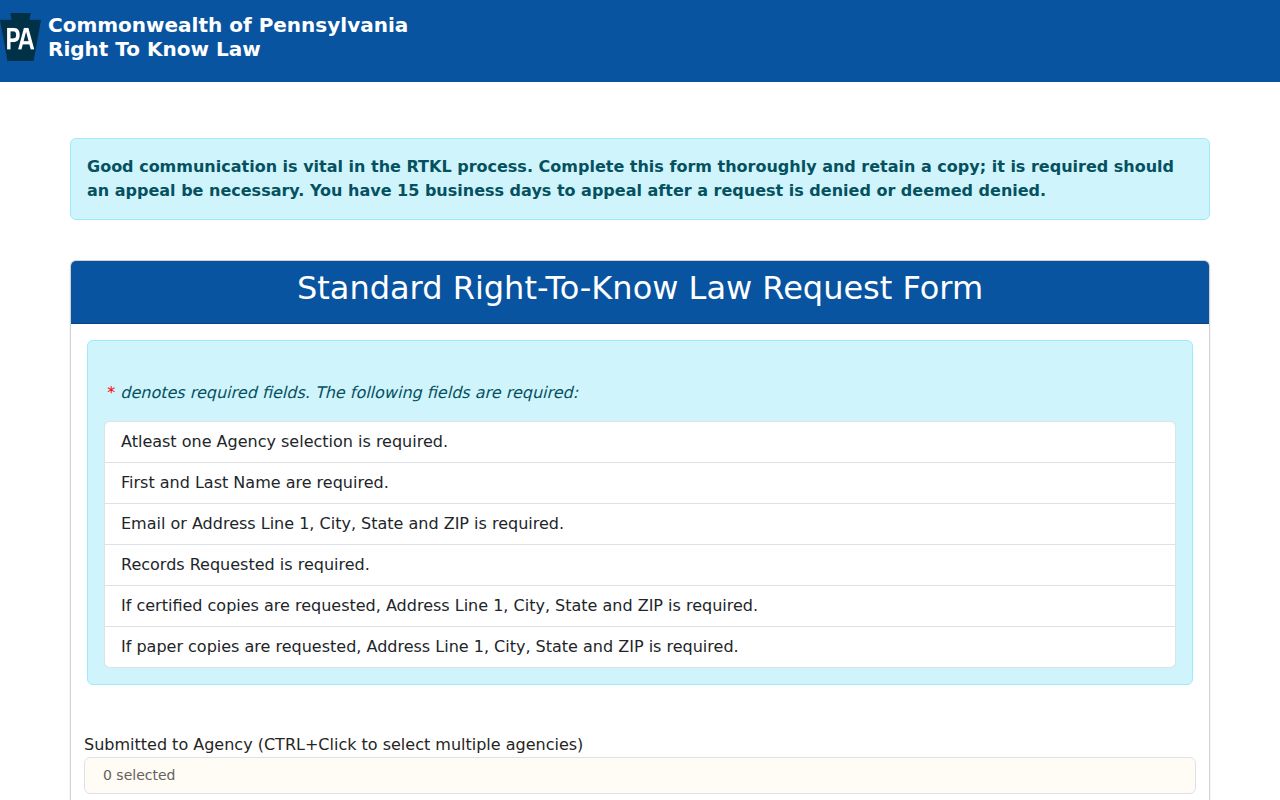
The form directs a requester to choose an access preference, but that selection does not make a protected record public or move it from its lawful custodian.
Lackawanna County also publishes a local request form for county administrative records. It allows email, mail, fax, or in-person submission and asks for requester details, a description of existing records, and a choice of copies, inspection, or certified copies. The form identifies Fran Pantuso in the Commissioners’ Office, 200 Adams Avenue, sixth floor, Scranton, PA 18503, 570-963-6750, pantusof@lackawannacounty.org. That contact is an open-records route for county administration, not a replacement for a Recorder instrument, a judicial file, an election list, or a vital record controlled by another rule.
The Office of Open Records overview explains the presumption of access and the agency’s burden when withholding a record under an exemption or another controlling law.
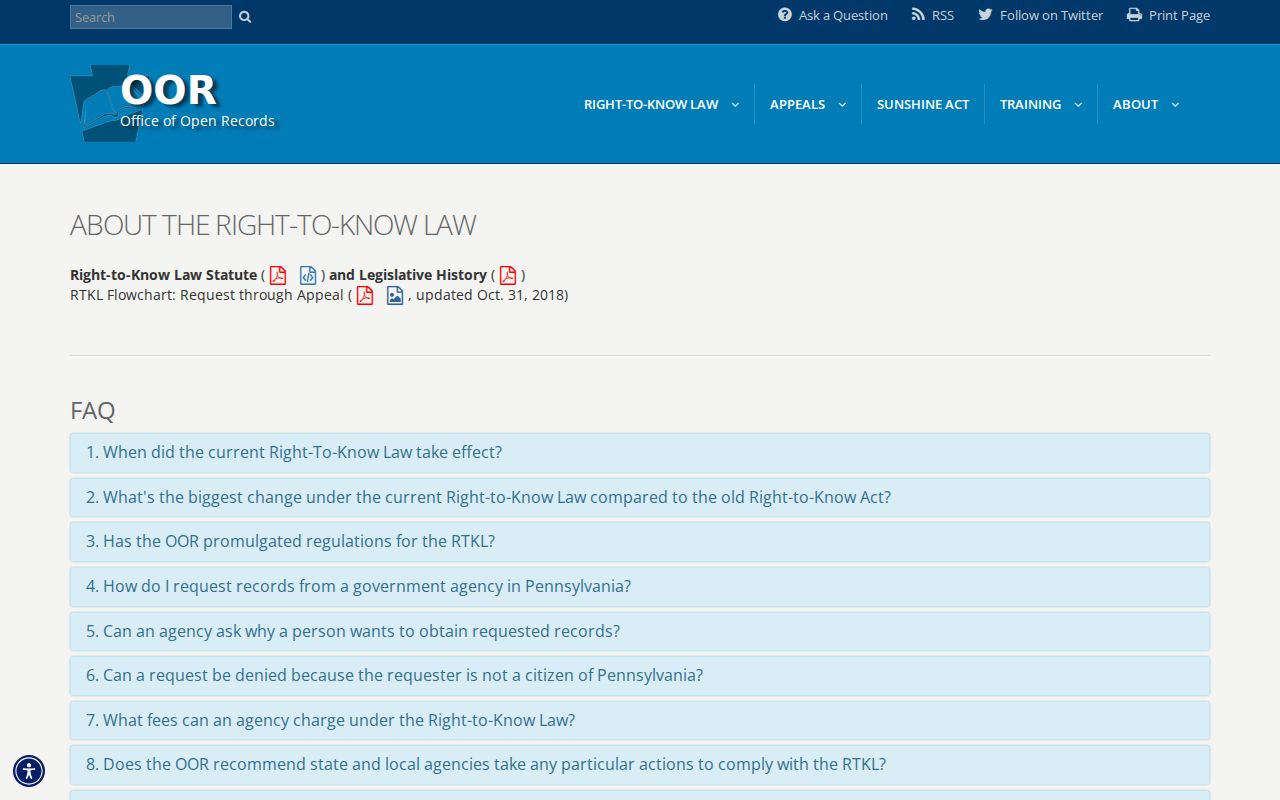
Use the Right-to-Know process for a defined administrative record, after confirming that a separate court, election, or vital-record rule does not control.
State Vital Records Behind County Names
Pennsylvania’s Division of Vital Records holds births, deaths, and fetal deaths from 1906 forward, but modern certificates are application-controlled. For historical research, births become public after 105 years and deaths after 50 years under 35 P.S. § 450.807. The State Archives identifies its original holdings as births from 1906 through 1920 and deaths from 1906 through 1975. Its noncertified request needs the person’s name, event date, and certificate number, with added month and county details for certain birth years.
The official State Archives request route charges $5 per certificate and says the fee is retained if no record is found. It estimates two to three weeks after the online or mail request and payment flow. That copy is historical research evidence, not a modern certified certificate.
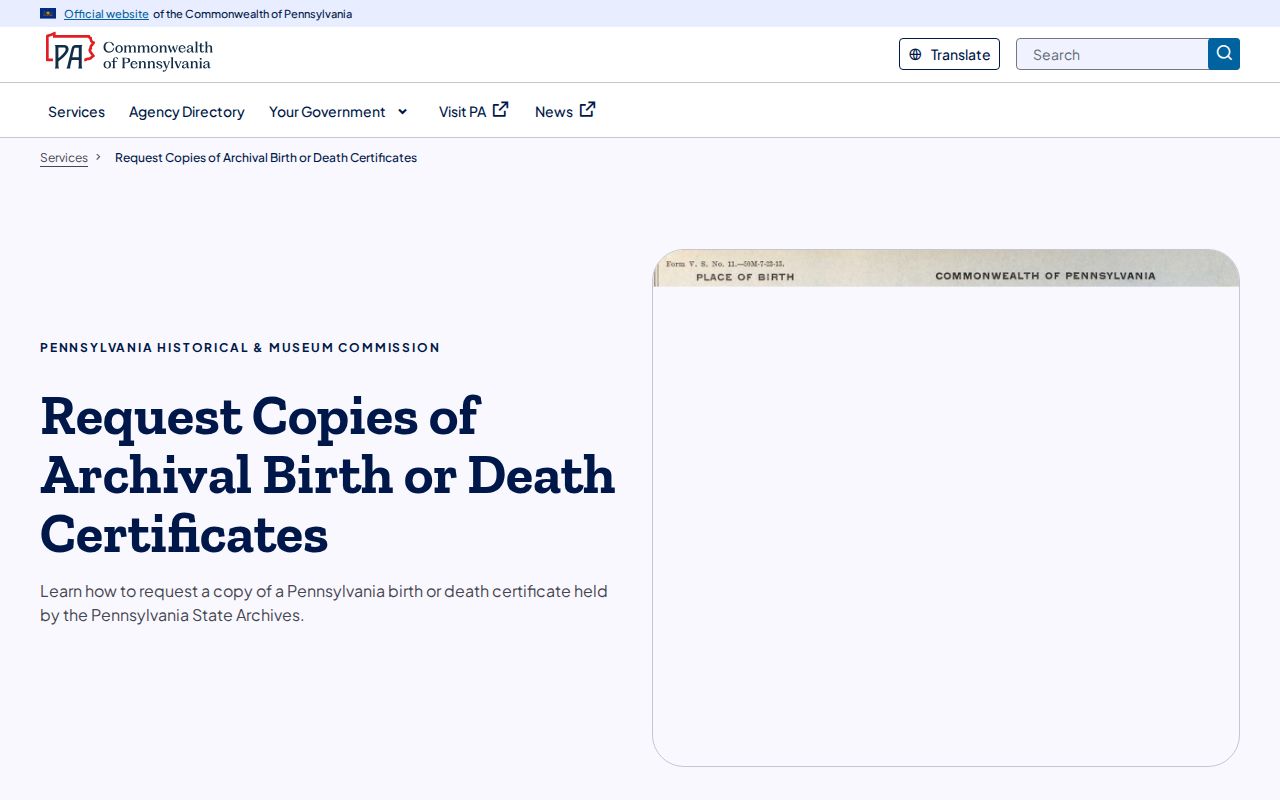
For Scranton births and deaths from 1878 through 1905, the Scranton Public Library’s microfilm route is the local alternative to a post-1906 state search.
Pennsylvania’s vital-record genealogy guidance separates public-era archival work from the Division’s controlled certified-copy process.
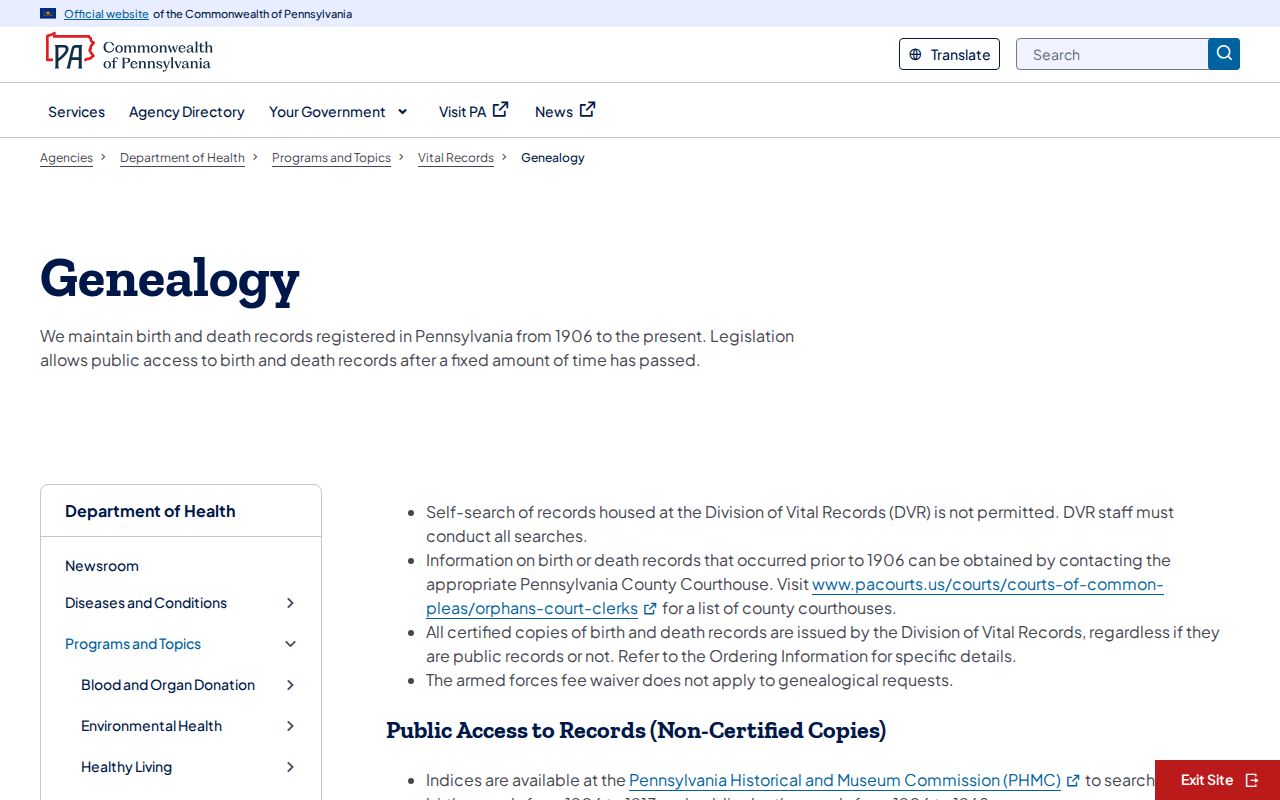
Marriage licenses issued in Lackawanna County and divorce files follow their county marriage and court channels instead of the statewide birth and death workflow.
The local historical fallback is more granular than a simple pre-1906 label. LCLS directs Scranton birth and death research from 1878 through 1905 to Scranton Public Library microfilm. It identifies deaths outside Scranton in the county from 1893 through 1905 with a Register of Wills route. Marriage licenses from October 1885 forward belong with the Lackawanna County Marriage Bureau, and divorce files from October 1885 forward belong with the Clerk of Judicial Records. The county marriage page requires both applicants to appear to complete a new application and identifies a three-day waiting period, while historic searches use the issuing county’s record channel.
Historical Lackawanna County Resident Directories
Historical directory evidence is concentrated in Scranton and Carbondale repositories, not one countywide volume. The Lackawanna Historical Society identifies Webb’s Scranton City Directory for 1876-77 and a Scranton directory run for 1902-1985. The Scranton Public Library’s Albright local-history collection holds city directories, maps, atlases, clippings, family-history sources, and newspaper microfilm. Carbondale’s Alice Ahern Lynady Room keeps its own city directories and early local papers. Copy a complete entry, year, page, and printed abbreviation before interpreting it.
A directory year is a household lead, not proof that a person was present on a particular day. Pair it with a census, deed, obituary, estate date, or map. The Lackawanna County city directories collection page gives the detailed repository and reading workflow, while a street-address trail belongs on the By Street page.
Lackawanna County Resident Records Geography
Scranton is the county seat, but it is not the whole county. Lackawanna County has 40 municipalities, and the right library, municipality, postal label, court context, or historic repository can change with the address. A USPS ZIP, a mailing city, a municipal boundary, a parcel, and a deed’s legal description are different location systems. Preserve the place name printed in the source, then check the county parcel and municipal context before translating it to a modern label.
The U.S. Census Bureau’s Lackawanna County QuickFacts provides the county-scale context used by this directory work.
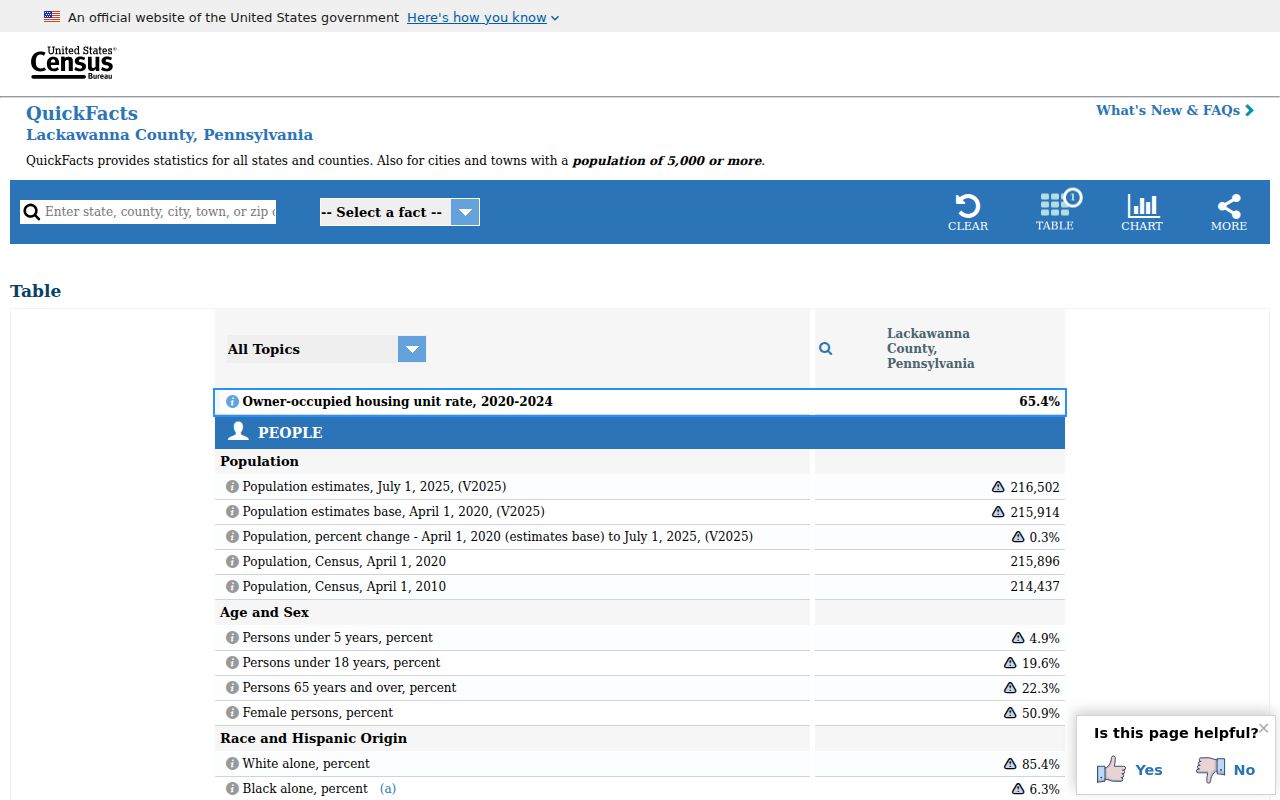
That geography is why a property or historical-record search should identify the municipality before asking for a local permit, code, library, or community record.
Carbondale deserves its own check when its name appears in a source. The Alice Ahern Lynady Room preserves Greater Carbondale local-history material, city directories, early newspapers, historical documents, and access to named databases. The Library System also distinguishes Scranton from other county locations for certain historical vital events. For an older naturalization, Lackawanna County’s 1878 formation is equally important: material before that date for the present territory can be in Luzerne County. The place printed on the record, not a modern assumption, should guide the next repository.
Note: A postal city or ZIP is a delivery clue, not a substitute for the parcel, municipal boundary, or legal description.
Lackawanna County Business Record Name Matches
Some records can corroborate an affiliation after a person or family name is already tied to a record, but they do not establish a home address. Pennsylvania’s Business Entity Search requires an entity name or file number, not an officer or owner name. It can return an exact entity name, filing or effective dates, type, status, filing history, and listed positions where available. Translate a known trade or entity name into that search rather than assuming a personal-name result.
The Department of State’s record-search guidance sets out the limits of the official entity search.
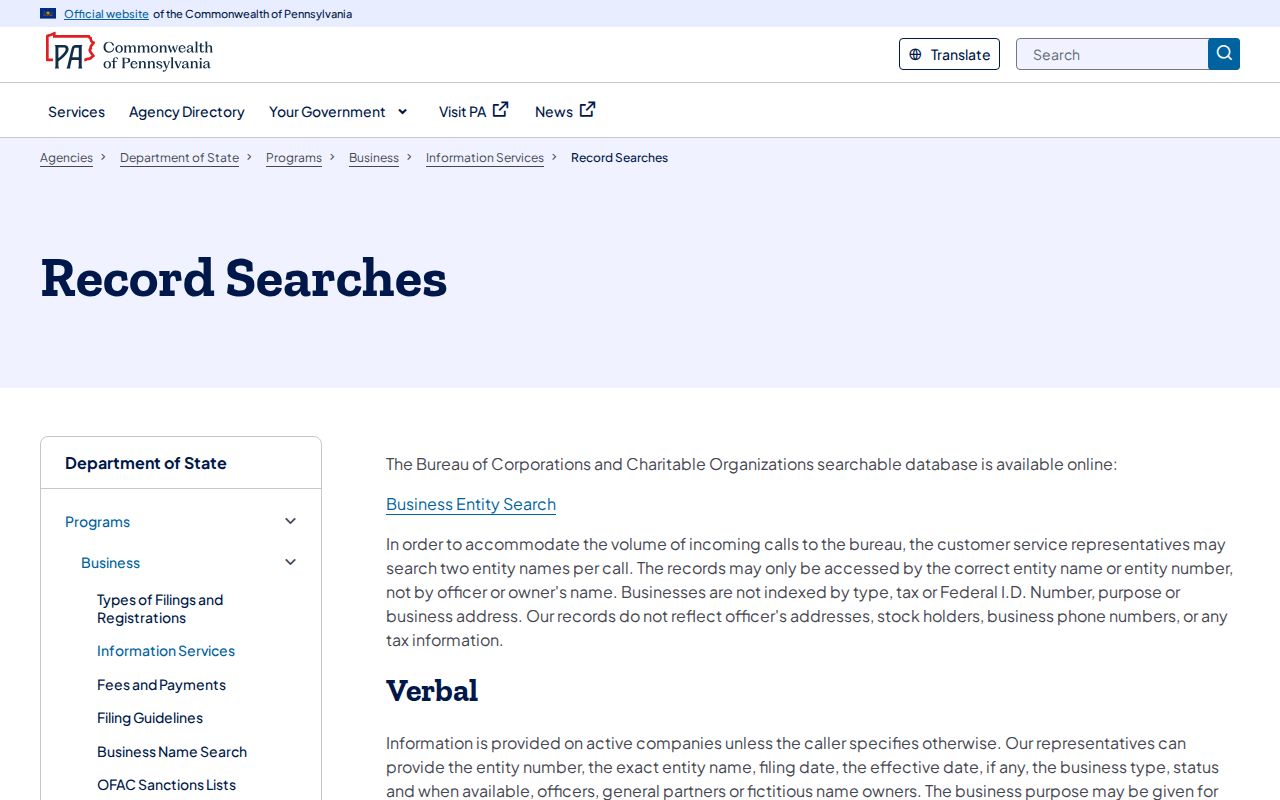
Likewise, PALS can confirm a public credential, license status, or published disciplinary history where a participating board provides it, without turning a credential record into a residents directory.
Lackawanna County Custody Record Limits
No verified official online Lackawanna County jail roster was located during the research. The county Prison, Sheriff, or appropriate records custodian is the starting point for its permitted information channels. The Pennsylvania Department of Corrections locator is a separate statewide tool for people under Department jurisdiction. It is updated daily, but it expressly excludes county-facility and out-of-state custody, so it must never be treated as a Lackawanna County jail roster.
The Pennsylvania DOC Inmate and Parolee Locator accepts a last name or inmate number, with an optional first name and additional filters.
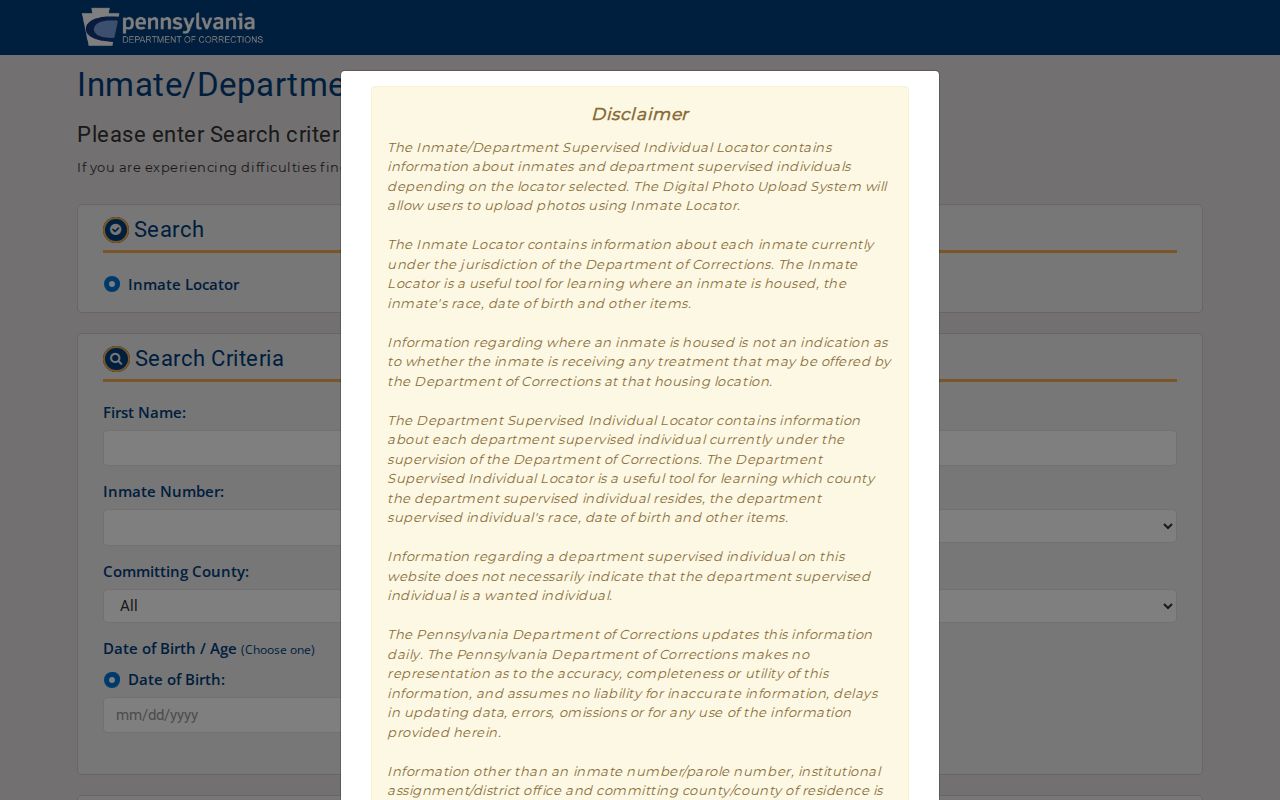
The result should be verified with the DOC or named custodian before any conclusion about present custody or location.
Lackawanna County Assessment Record Dates
Lackawanna County completed a comprehensive reassessment in 2025, the first in nearly 60 years. That date matters when comparing a present property screen with an older deed or family record. A current value, physical description, or photo may reflect the reassessment project rather than a transfer or a move. Keep the date and source screen with any note from a current parcel result.
Public records remain useful for personal, lawful research, yet they are not an invitation to reconstruct private households. Protected voter fields, Address Confidentiality Program records, DMV information, utility accounts, and private customer lists remain outside a legitimate residents-directory search. Do not use a name, parcel, or archive record to stalk, harass, or intimidate anyone.
Recorder access has a similar record-specific limit. Act 97 of 2024 protects recorded military discharge records for 85 years after the recorded event, subject to defined access recipients. The Recorder’s 2025 fee notice and January 2026 e-recording printing-fee change are reminders that costs and procedures can change. Confirm a copy route and current fee with the office before ordering or presenting a document. The county’s Fraud Guard channel can notify a subscriber about recording-related activity, but it does not determine fraud or substitute for review of the actual instrument.